You use it every day. You work for it, worry about it, dream about it. But have you ever stopped and asked: “Wait… where does money actually COME from?”
Is there a giant printer somewhere cranking out dollar bills 24/7? Does the president push a button? The real answer is weirder — and way more interesting — than you think.
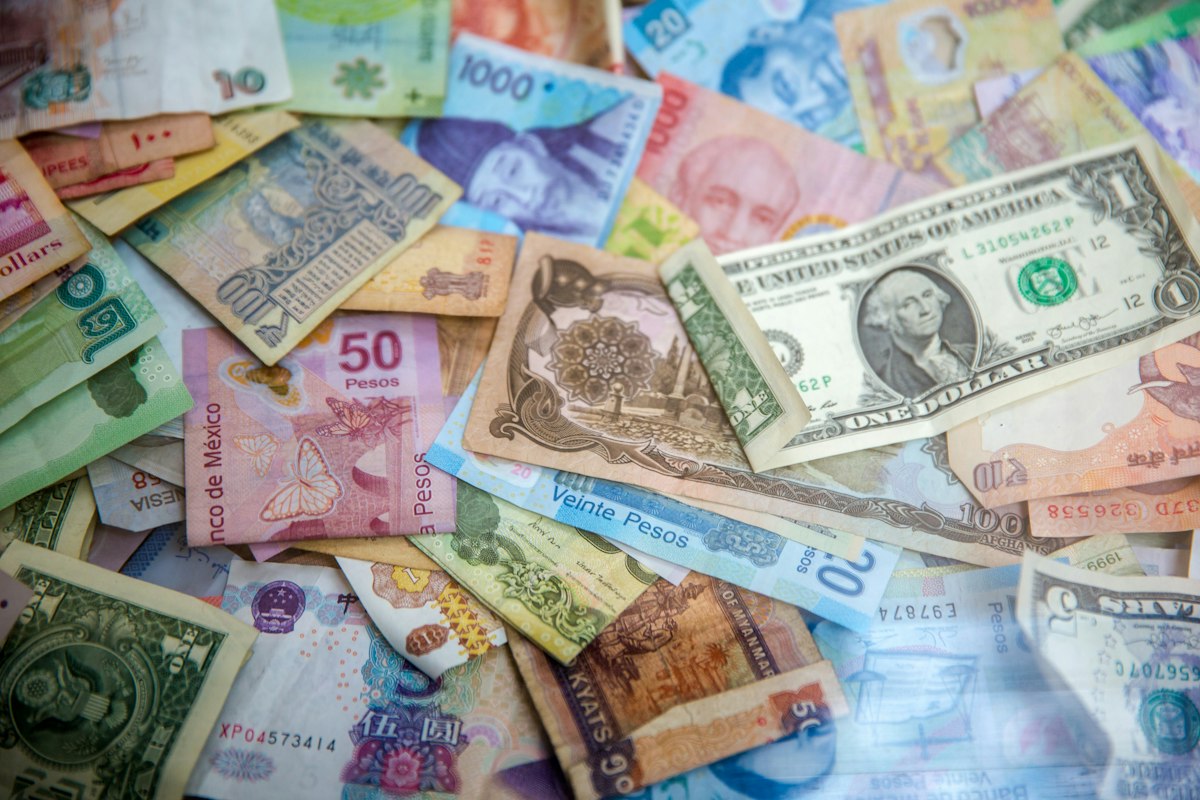
Physical Money — Who Prints the Bills?
Let’s start with the stuff you can actually touch. In the US, physical currency is made by two agencies:
- The Bureau of Engraving and Printing (BEP) prints paper money. They have two facilities — Washington D.C. and Fort Worth, Texas — and print about $560 million worth of bills every single day.
- The United States Mint makes coins. They produce billions of coins per year across four facilities.
But here’s the plot twist: the BEP and the Mint don’t decide how much money to make. That’s the Federal Reserve’s job. The Fed tells them how many bills and coins are needed to replace worn-out currency and meet public demand.
Think of it like a restaurant: the kitchen (BEP/Mint) cooks the food, but the manager (the Fed) decides what goes on the menu and how much to serve.

But Wait — 92% of Money Isn’t Even Physical
Here’s something that blows most people’s minds: only about 8% of the world’s money exists as physical cash. The other 92%? It’s just numbers on computer screens. Digital entries in bank databases.
Think about it. When was the last time your employer handed you a stack of cash on payday? When did you last pay rent with physical bills? Most money today moves electronically — direct deposits, credit card swipes, Venmo transfers, wire payments.
That $5,000 sitting in your bank account? Your bank doesn’t have $5,000 in crisp bills with your name on them in a vault somewhere. It’s a number in a computer. And this brings us to the truly mind-bending part…

How Banks Create Money Out of Thin Air
This is where it gets wild. Commercial banks — the ones where you have a checking account — actually CREATE money. Not by printing it, but through something called fractional reserve banking.
Here’s how it works: When you deposit $1,000 in a bank, the bank is only required to keep a fraction of it (say, 10%) as reserves. The other $900? They lend it to someone else.
That person deposits the $900 in their bank, which keeps $90 and lends out $810. That $810 gets deposited, and $729 gets lent out. And on and on it goes.
Your original $1,000 deposit can eventually create up to $10,000 in total money in the economy. The money didn’t come from a printer. It came from lending. Banks literally create money by making loans.
“Wait, doesn’t that mean there’s more money owed than money that exists?” Yes. Exactly. Welcome to modern banking. It works because not everyone withdraws their money at the same time. When they do? That’s called a bank run, and it’s as terrifying as it sounds.

The Central Bank’s Magic Wand
So if commercial banks create money through lending, what does the central bank (like the Federal Reserve) do? They control the rules of the game:
1. Interest rates: By raising or lowering rates, central banks make borrowing more expensive or cheaper. Lower rates = more lending = more money created. Higher rates = less lending = money supply shrinks.
2. Reserve requirements: Central banks can change how much cash banks must keep on hand. Lower requirements mean banks can lend more (and create more money).
3. Open market operations: The Fed buys government bonds from banks, injecting new money into the system. When they sell bonds, they pull money out.
4. Quantitative Easing (QE): During crises (2008, 2020), central banks go into overdrive. The Fed created trillions of dollars during COVID by buying bonds. That money didn’t exist before — it was created digitally, with a few keystrokes. Yes, really.

So Who REALLY Controls the Money Supply?
The honest answer? It’s complicated. It’s a dance between multiple players:
- Central banks — set the rules, control interest rates, can create money directly
- Commercial banks — create money through lending based on the central bank’s rules
- The government — borrows and spends, influencing how much money flows through the economy
- You and me — our borrowing and spending decisions collectively determine how much money gets created
Nobody has a single “money printer” button. It’s a massive, interconnected system where multiple players influence the total amount of money in the economy. And this is why inflation, deflation, and monetary policy are such hot topics — getting the money supply “right” is one of the hardest jobs in economics.
Bonus Fact
During Zimbabwe’s hyperinflation in 2008, the country printed a 100 TRILLION dollar bill. Despite the astronomical number, it was worth about $0.40 USD at the time. Proof that printing more money doesn’t make a country richer — it just makes each bill worth less. The ultimate “it’s not about quantity, it’s about value” lesson.

Wrapping It Up
Money is one of those things we use every day without really understanding where it comes from. Now you know: most of it isn’t printed at all. It’s created by banks making loans, managed by central banks tweaking interest rates, and it mostly exists as digital numbers in computers.
The next time someone says “just print more money,” you can explain why it’s not that simple — and maybe blow their mind a little in the process.
Understanding where money comes from is the first step to understanding where YOUR money should go.
Disclaimer: This article is for educational purposes only and does not constitute financial advice. Please consult a qualified financial advisor before making any investment decisions.
Sources
- Federal Reserve — Money Creation and the Federal Reserve System
- Bank of England — Money Creation in the Modern Economy (2014)
- Investopedia — Fractional Reserve Banking, Money Multiplier
- U.S. Bureau of Engraving and Printing — Currency Production Data