Imagine a world where the land under the Imperial Palace in Tokyo — a space roughly the size of Central Park — was worth more than all the real estate in California. Where a single golf club membership cost $3 million. Where companies were buying Van Gogh paintings for $80 million just because they could.
This wasn’t some alternate universe. This was Japan in the late 1980s.
For a brief, surreal moment in history, Japan’s economy became so inflated that the tiny island nation’s real estate was theoretically worth more than the entire United States — a country 25 times its size. And then, almost overnight, it all collapsed. What followed was one of the most devastating economic crashes in modern history — one that Japan still hasn’t fully recovered from, over 30 years later.
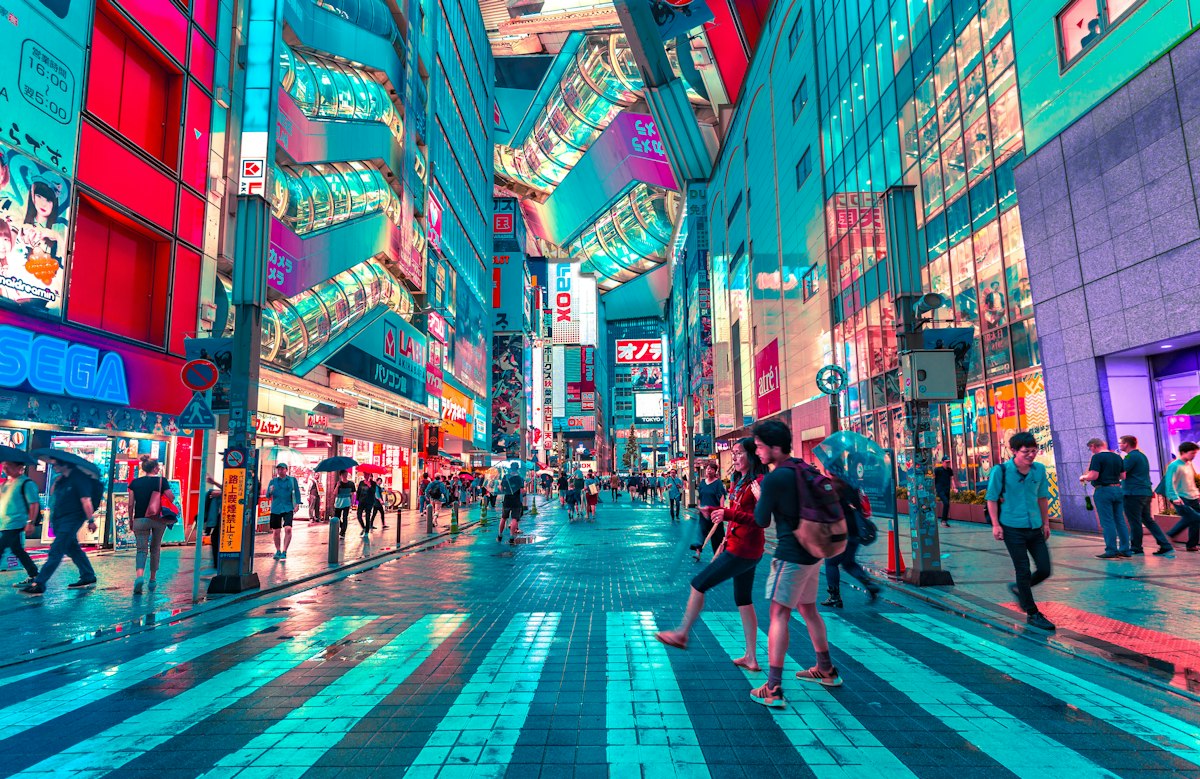
How Japan Became an Economic Superpower (1950s-1980s)
To understand the bubble, you need to understand the miracle that came before it.
After World War II, Japan was in ruins. Two atomic bombs. Firebombed cities. A shattered economy. But over the next 40 years, Japan pulled off one of the greatest economic comebacks ever. The government worked closely with corporations, invested heavily in manufacturing, and focused obsessively on exports.
The results were extraordinary:
- Japan became the world’s #1 producer of cars, electronics, and steel
- Sony, Toyota, Honda, Panasonic, and Nintendo became global household names
- By 1980, Japan had the second-largest economy on Earth
- “Made in Japan” went from meaning “cheap junk” to meaning “premium quality”
By the mid-1980s, Japan was riding high. Everyone believed the Japanese economy was invincible. Business books about Japanese management style were bestsellers in America. People genuinely thought Japan would overtake the US as the world’s dominant economy. That confidence — that absolute certainty that prices would only go up — is exactly what created the bubble.
The Bubble: When Reality Left the Building (1985-1989)
The bubble was triggered by a specific event: the Plaza Accord of 1985. The US, UK, France, West Germany, and Japan agreed to weaken the US dollar against the Japanese yen. The goal was to reduce America’s trade deficit with Japan.
The yen skyrocketed in value — nearly doubling against the dollar in two years. This was a crisis for Japanese exporters who suddenly couldn’t sell their products abroad at competitive prices. So the Bank of Japan did what central banks do: they slashed interest rates to stimulate the domestic economy. Rates dropped from 5% to 2.5% — the lowest in Japanese history at the time.
And that’s when things went completely insane.
With super-cheap borrowing costs, banks started lending aggressively. People and companies borrowed enormous sums to buy real estate and stocks. As prices went up, the assets they’d bought became “worth more,” so banks lent even more against them. A classic feedback loop:
- Cheap loans → buy assets → prices rise → borrow more → buy more assets → prices rise more
- Tokyo land prices tripled between 1985 and 1989
- The Nikkei 225 stock index went from 13,000 in 1985 to 38,957 on December 29, 1989 — a 3x gain in 4 years
- Total Japanese real estate was valued at roughly $20 trillion — about 4 times the value of all US real estate combined
Nobody questioned it. Everyone assumed prices would keep going up forever. That’s the defining feature of every bubble in history: the absolute conviction that “this time is different.”
How Crazy Did It Get? (Spoiler: Really Crazy)
The numbers from Japan’s bubble era are genuinely hard to believe. Here are some real examples:
The Imperial Palace grounds in central Tokyo (about 3.4 square kilometers) were estimated to be worth more than all the real estate in California — or in some calculations, more than all of Canada.
Ginza district land prices hit $250,000 per square meter. That’s $1.5 million for a space the size of a parking spot.
Japanese companies went on a worldwide buying spree. Mitsubishi Estate bought Rockefeller Center in New York. Sony bought Columbia Pictures. Japanese investors bought Pebble Beach golf course. It felt like Japan was literally buying America.
At its peak, the Tokyo Stock Exchange represented over 40% of the entire world’s stock market value. Japan — a country smaller than California — had a stock market worth more than the US, UK, Germany, and France combined.
Golf club memberships in Tokyo sold for $1-3 million each. Corporate expense accounts were limitless. Taxi drivers were tipped with $100 bills. Companies hired helicopters to fly executives to golf courses to avoid Tokyo traffic.
It was the definition of irrational exuberance. And like every bubble before it, it was built entirely on the belief that prices could only go up.

The Pop: How the Bubble Burst (1990-1992)
The Bank of Japan finally realized things had gone too far. In May 1989, they started raising interest rates — from 2.5% to 6% by 1990. They also introduced lending restrictions to cool down real estate speculation.
The effect was like pulling the plug on a bathtub. Everything drained at once.
- The Nikkei crashed from 38,957 (Dec 1989) to 14,309 by August 1992 — a 63% collapse
- Tokyo real estate prices dropped 80% from their peak
- Trillions of dollars in paper wealth evaporated
- Banks were left holding massive amounts of bad loans against now-worthless property
- Dozens of banks and financial institutions collapsed
The crash didn’t just hurt investors. It devastated ordinary Japanese people who had bought homes at peak prices. Imagine buying a house for $1 million in 1989 and watching it drop to $200,000 by 1995 — while you still owe the bank $900,000 on your mortgage. Millions of Japanese families were trapped in this nightmare.
The Lost Decades: A 30-Year Hangover
What makes Japan’s bubble unique isn’t just how big it was — it’s how long the aftermath lasted.
Economists originally called the 1990s Japan’s “Lost Decade.” Then the stagnation continued through the 2000s, so it became the “Lost Two Decades.” Now, with Japan still struggling with deflation and slow growth well into the 2020s, many call it the “Lost Three Decades.”
Some staggering facts about the aftermath:
- The Nikkei 225 hit 38,957 in December 1989. It didn’t reach that level again until February 2024 — 34 years later
- Japanese real estate prices didn’t bottom out until 2012 and many areas still haven’t recovered to 1989 levels
- Japan went from the world’s most dynamic economy to a textbook example of economic stagnation
- An entire generation of Japanese workers entered the job market during the crash and never recovered — they’re called the “Lost Generation” (氷河期世代)
If you invested $10,000 in the Nikkei at its peak in 1989, it would have taken you 34 years just to break even — not accounting for inflation. Meanwhile, $10,000 in the S&P 500 over the same period would have grown to over $200,000.
What Can We Learn From This?
Japan’s bubble isn’t just a history lesson — it’s a warning that applies to every market, every generation:
1. “Prices always go up” is the most dangerous sentence in finance. Every bubble in history — tulips, dot-com, US housing, crypto — was fueled by this exact belief. The moment everyone is convinced prices can only go up, that’s usually when they’re about to go down.
2. Cheap money creates bubbles. When interest rates are too low for too long, people borrow too much and bid up prices on everything. This lesson has repeated in 2008 (US housing) and arguably in 2020-2021 (everything bubble).
3. Bubbles can last longer than you think. Japan’s bubble ran for roughly 4 years. During that time, anyone who said “this is unsustainable” was laughed at. Being early in calling a bubble is the same as being wrong — until suddenly you’re right.
4. Recovery isn’t guaranteed. Americans are used to markets that bounce back within a few years. Japan proves that isn’t always the case. A market crash can take decades to recover — or may never fully recover at all.
Bonus Fact
At the peak of the bubble in 1989, the total value of all real estate in Japan was estimated at approximately $20 trillion — roughly 4 times the entire US real estate market and about 5 times Japan’s own GDP. To put that in perspective, Japan’s total land area is about 378,000 square kilometers. The US is about 9.8 million square kilometers — 26 times larger. Yet Japan’s land was supposedly worth 4x more. That’s like saying a 500-square-foot apartment in Manhattan is worth more than the entire state of Texas. The math never made sense. But for a few wild years, everyone pretended it did.
Wrapping It Up
Japan’s bubble economy is one of the most dramatic cautionary tales in financial history. A country that did everything right for 40 years — hard work, innovation, exports, savings — got drunk on success, cheap money, and the belief that the good times would never end.
The bubble made people feel rich. The crash made them realize that wealth built on speculation and debt isn’t real wealth — it’s borrowed time.
Next time someone tells you that real estate “always goes up” or that a particular market “can’t crash” — remember Japan. Remember that there was a time when the land under one palace in Tokyo was worth more than all of California. And remember what happened next.
Disclaimer: This article is for educational purposes only and does not constitute financial advice. Past market events do not predict future performance. Please consult a qualified financial advisor before making any investment decisions.
Sources
- Bank of Japan — Historical Monetary Policy Data
- Nikkei Asia — Historical Nikkei 225 Index Data
- International Monetary Fund — Japan Economic Reports
- Werner, R. — “Princes of the Yen: Japan’s Central Bankers and the Transformation of the Economy”