You check the exchange rate on Monday: 1 USD = 1,350 Korean won. You check again on Friday: 1 USD = 1,380 won. By next Monday it’s back to 1,340. What happened? Did the dollar get stronger? Did the won get weaker? Did someone sneeze at the Federal Reserve?
Exchange rates are one of those things that affect literally everyone — whether you’re traveling abroad, buying imported goods, investing, or just filling up your gas tank — but almost nobody actually understands WHY they move.
So let’s break it down. Why does the value of $1 change every single day, and what forces are pulling it up and down?
First: What IS an Exchange Rate?
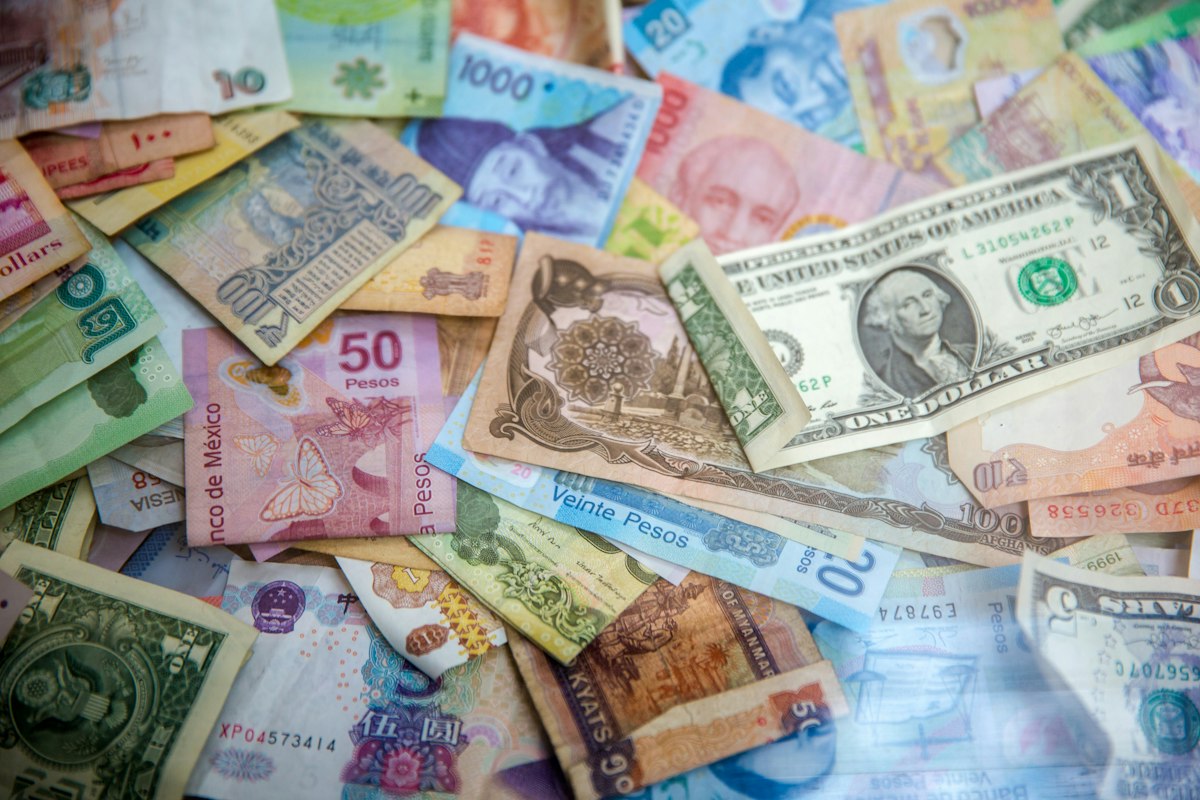
An exchange rate is simply the price of one currency in terms of another. When we say “1 USD = 1,350 KRW,” we’re saying that one US dollar can be traded for 1,350 Korean won.
But here’s the key insight: currencies are traded on a market, just like stocks, oil, or gold. There’s a massive global marketplace called the foreign exchange market (forex) where currencies are bought and sold 24 hours a day. And just like any market, prices move based on supply and demand.
The forex market is, by far, the largest financial market in the world. About $7.5 trillion worth of currency is traded EVERY SINGLE DAY. That’s more than the entire annual GDP of Japan — traded in one day. The stock market looks tiny by comparison.

The Big 5: What Actually Moves Exchange Rates
There are five major forces that push exchange rates up and down every day:
1. Interest Rates (The Biggest Driver)
This is the #1 factor. When a country raises its interest rates, its currency usually gets stronger. Why? Because higher interest rates attract foreign investors who want better returns on their money.
Think about it: if US banks offer 5% interest and Japanese banks offer 0.5%, where would you park your money? The US, obviously. But to deposit money in US banks, foreign investors need to buy US dollars first. More people buying dollars = higher demand = dollar gets stronger.
This is why every time the Federal Reserve announces an interest rate change, exchange rates around the world react within seconds.
2. Inflation (The Silent Currency Killer)
Countries with lower inflation tend to have stronger currencies. If inflation in the US is 2% but inflation in Argentina is 100%, a dollar will buy increasingly more Argentine pesos over time — because pesos are losing value much faster.
High inflation = your currency buys less = it becomes less attractive to hold = exchange rate drops. This is why countries with hyperinflation (like Venezuela or Zimbabwe) see their currencies become essentially worthless.
3. Trade Balance (Exports vs. Imports)
If Japan exports $100 billion worth of cars to the US, American buyers need to convert dollars into yen to pay for them. That means more demand for yen, which makes yen stronger.
Conversely, if a country imports way more than it exports (trade deficit), its currency tends to weaken because it’s constantly selling its own currency to buy foreign goods.
This is why countries with strong exports (like Germany, China, and South Korea) often have relatively strong currencies.
4. Political Stability and Economic Confidence
Money flows to safety. When a country has stable politics, strong institutions, and predictable economic policies, investors feel confident putting their money there. When there’s political chaos, corruption, or uncertainty, money flees.
This is why the US dollar, Swiss franc, and Japanese yen are considered “safe haven” currencies — during global crises, people rush to buy them, making them stronger. During the 2008 financial crisis, the yen actually got STRONGER even though Japan was in recession, because investors were fleeing riskier currencies.
5. Speculation (The Casino Factor)
Here’s the dirty secret of the forex market: the vast majority of currency trading has nothing to do with actual trade or investment. It’s pure speculation.
Banks, hedge funds, and algorithmic traders buy and sell currencies worth trillions every day, betting on which direction rates will move. If enough big players bet that the euro will fall, their selling pressure can actually MAKE the euro fall — a self-fulfilling prophecy.
This speculation is why exchange rates can sometimes move dramatically on a single news headline or tweet, even when the underlying economic fundamentals haven’t changed at all.
A Day in the Life of an Exchange Rate
Let’s walk through a hypothetical day to see how all these forces play out:
- 8:00 AM Tokyo: Japan releases trade data showing a record export surplus. Demand for yen rises → yen strengthens.
- 10:00 AM London: UK inflation comes in higher than expected. Markets worry the Bank of England is behind the curve → pound weakens.
- 2:00 PM New York: The Fed hints at raising interest rates. Global investors rush to buy dollars → dollar surges.
- 4:00 PM: A geopolitical crisis erupts in the Middle East. Investors panic and flee to safe havens → Swiss franc and yen spike.
All of this happens in a single day. Exchange rates are constantly reacting to new information from every corner of the world, 24 hours a day, 5 days a week.

Central Banks: The Puppet Masters
Central banks (the Federal Reserve, European Central Bank, Bank of Japan, etc.) have enormous power over exchange rates. They can influence currencies in two main ways:
Setting interest rates: As we discussed, higher rates attract money. When the Fed raised rates aggressively in 2022-2023, the dollar hit 20-year highs against most currencies.
Direct intervention: Central banks can literally buy or sell their own currency on the open market. In 2022, Japan spent $60 billion buying yen to stop it from falling too fast against the dollar. China regularly intervenes to manage the yuan’s value.
Some countries take it even further with “pegged” exchange rates — they fix their currency’s value to another currency (usually the dollar). Saudi Arabia, Hong Kong, and several other countries maintain pegs. This means their central banks must constantly buy and sell currencies to maintain the fixed rate, which requires massive foreign currency reserves.
How Exchange Rates Affect YOUR Life
“OK, cool story about forex. But why should I care?”
Because exchange rates affect you way more than you think:
Gas and oil prices: Oil is priced in dollars globally. When the dollar is strong, oil becomes cheaper in dollar terms but more expensive for countries using other currencies.
Imported goods: Your iPhone, your Nike shoes, your coffee beans — all affected by exchange rates. A weaker local currency makes imports more expensive.
Travel: A strong dollar means your vacation in Europe or Japan is effectively cheaper. A weak dollar means everything abroad costs more.
Jobs: If your country’s currency is too strong, exports become expensive and factories may close. Too weak, and imported raw materials become unaffordable.
Bonus Fact
The most traded currency pair in the world is EUR/USD (euro vs. dollar), accounting for about 22% of all forex trading — roughly $1.7 trillion per day. The second most traded? USD/JPY (dollar vs. yen). Together, just these two currency pairs account for nearly 40% of all global forex activity. The US dollar is involved in approximately 88% of all forex transactions — making it the undisputed king of currencies, not because of any law, but because the entire world has agreed to use it as the default.
Wrapping It Up
Exchange rates aren’t random. They move because of real forces — interest rates, inflation, trade flows, investor confidence, and speculation — all pushing and pulling simultaneously. It’s like a tug-of-war with dozens of teams, each pulling in different directions.
The next time you see the exchange rate change on your banking app, you’ll know: it’s not random noise. It’s the entire global economy voting, in real time, on what each currency is worth.
And that’s actually pretty wild when you think about it. Every single second, trillions of dollars are being traded based on how the world collectively feels about the future of different economies. Your exchange rate is, quite literally, a reflection of global confidence — updated in real time.
Disclaimer: This article is for educational purposes only and does not constitute financial advice. Currency markets carry significant risk. Please consult a qualified financial advisor before making any investment or trading decisions.
Sources
- Bank for International Settlements — Triennial Central Bank Survey of Foreign Exchange Turnover
- Federal Reserve — Exchange Rates and International Finance
- International Monetary Fund — Exchange Rate Arrangements and Policies
- Investopedia — Factors That Influence Exchange Rates