Imagine you have $12,000 to invest. You’re staring at a stock chart, trying to figure out the perfect moment to buy. The market dipped yesterday — is this the bottom? Or will it drop further? Maybe you should wait for the next earnings report. Or maybe the rally starts tomorrow and you’ll miss it entirely.
This agonizing decision — “when should I invest?” — paralyzes millions of people every year. And it’s the wrong question to ask.
Dollar-cost averaging (DCA) is an investment strategy that eliminates this question entirely. Instead of investing a lump sum all at once, you invest a fixed amount at regular intervals — say, $1,000 per month for 12 months. It’s boring, it’s mechanical, and according to decades of data, it works remarkably well for most investors.
—
How Dollar-Cost Averaging Works

The mechanics are simple. You pick an investment (a stock, an ETF, an index fund). You choose a fixed dollar amount. You invest that amount on a regular schedule — weekly, biweekly, or monthly — regardless of what the market is doing.
Here’s where the math gets interesting. Because you invest a fixed dollar amount each time, you automatically buy more shares when prices are low and fewer shares when prices are high. This happens without you making any decisions at all.
Let’s walk through a concrete example. Suppose you invest $500 per month in an S&P 500 index fund over six months, and the share price fluctuates as follows:
Month 1: Share price $50 → You buy 10 shares
Month 2: Share price $40 → You buy 12.5 shares
Month 3: Share price $35 → You buy 14.3 shares
Month 4: Share price $30 → You buy 16.7 shares
Month 5: Share price $40 → You buy 12.5 shares
Month 6: Share price $50 → You buy 10 shares
Total invested: $3,000. Total shares: 76. Average cost per share: $39.47.
Now compare this to lump-sum investing. If you had invested all $3,000 in Month 1 at $50 per share, you’d have 60 shares. With DCA, you ended up with 76 shares for the same total investment — 27% more shares — because you automatically bought more during the dip.
Your average cost per share ($39.47) is lower than the simple average price ($40.83) because DCA naturally weights your purchases toward lower prices. This mathematical advantage is called “buying the dip automatically.”
—
DCA vs. Lump Sum — What the Data Actually Shows
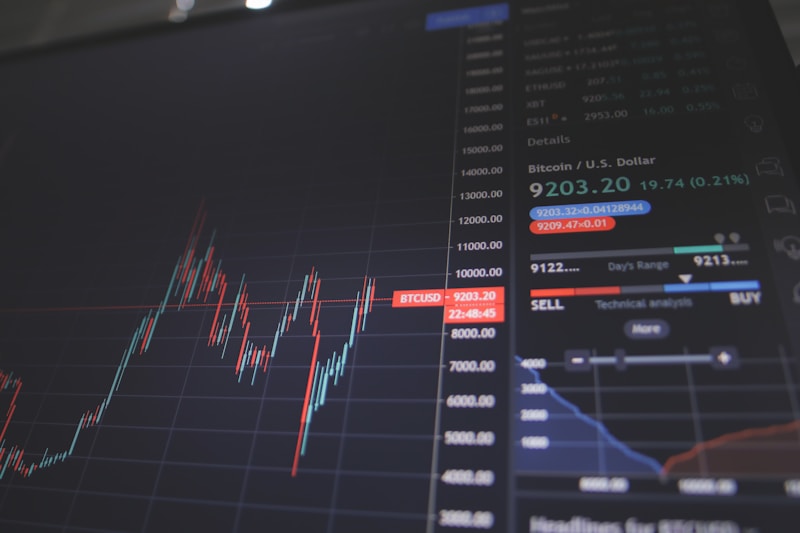
Here’s where intellectual honesty requires a caveat that many DCA advocates skip: in a market that trends upward over time, lump-sum investing actually beats DCA about two-thirds of the time.
A widely cited Vanguard study analyzed data from the US, UK, and Australian markets from 1926 to 2011 and found that investing a lump sum immediately outperformed 12-month DCA approximately 66% of the time. The reason is straightforward — since markets tend to rise over time, having your money invested for a longer period generally produces higher returns.
So why does anyone recommend DCA?
Because the analysis misses the most important variable: human behavior.
The Vanguard study assumes that investors actually invest the lump sum. In practice, many people who intend to invest a large sum end up sitting on the sidelines for months or years, waiting for the “right time.” They’re paralyzed by the fear of investing right before a crash. DCA solves this paralysis by removing the decision entirely. You invest on the schedule, period.
DCA also dramatically reduces the emotional impact of market volatility. If you invest $100,000 on Monday and the market drops 10% on Tuesday, you’ve lost $10,000 overnight. That kind of immediate, visible loss triggers powerful emotional reactions — panic, regret, the urge to sell — that lead to terrible investment decisions. With DCA, a market drop means your next purchase is cheaper. Downturns become opportunities rather than catastrophes.
—
The Psychology Behind DCA — Why It Actually Works

Behavioral economics explains why DCA is so effective in practice, even when it’s theoretically suboptimal.
Humans suffer from loss aversion — we feel the pain of losses approximately twice as intensely as the pleasure of equivalent gains. A $5,000 loss feels twice as bad as a $5,000 gain feels good. This asymmetry makes lump-sum investing psychologically brutal during downturns.
We also suffer from recency bias — the tendency to overweight recent events when making decisions. If the market has been falling, we assume it will keep falling. If it’s been rising, we assume it will keep rising. Both assumptions lead to poor timing decisions: buying at peaks (because the market seems “safe”) and selling at bottoms (because the market seems “dangerous”).
DCA neutralizes both of these cognitive biases by automating the process. You don’t need to overcome your fear of loss because you’re only investing a small amount at a time. You don’t need to fight recency bias because you’re investing on a schedule, not based on market conditions.
Research by financial psychologist Daniel Kahneman (Nobel Prize winner for his work on behavioral economics) has shown that the most important factor in long-term investment success isn’t picking the right investments — it’s staying invested consistently over time. DCA makes this dramatically easier by removing the emotional decision points that cause people to bail out.
—
How to Set Up DCA — A Practical Guide

Setting up DCA is surprisingly simple, and most brokerage platforms support automatic investing.
Step 1: Choose your investment. For most beginners, a broad market index fund (like one tracking the S&P 500 or total stock market) is the simplest and most diversified option. These funds give you exposure to hundreds or thousands of companies in a single purchase.
Step 2: Decide your amount. This should be an amount you can consistently invest without financial stress. The specific dollar amount matters less than consistency. $100 per month invested consistently for 30 years will almost certainly outperform $10,000 invested once and then nothing.
Step 3: Set your schedule. Monthly is most common, often aligned with payday. Some investors prefer biweekly to match pay cycles. The specific day doesn’t matter much — research shows minimal difference between investing on the 1st versus the 15th of the month.
Step 4: Automate it. Most brokerages (Fidelity, Schwab, Vanguard) allow you to set up automatic recurring investments. Set it and forget it. The automation removes the temptation to skip a month when the market looks scary.
Step 5: Don’t check obsessively. Checking your portfolio daily is a guaranteed way to undermine the emotional benefits of DCA. Monthly or quarterly reviews are sufficient.
—
When DCA Doesn’t Make Sense
DCA isn’t the optimal strategy in every situation. Here are the cases where it might not be the best approach.
If you receive a lump sum (inheritance, bonus, sale of property) and have a long investment horizon (10+ years) and a high risk tolerance, the data suggests investing the lump sum immediately will likely produce better returns. The key phrase is “likely” — there’s still a one-third chance DCA would have been better, and if the market happens to crash shortly after your lump-sum investment, the emotional pain can be severe.
DCA also provides less benefit in very stable, low-volatility investments. The mathematical advantage of DCA comes from buying more shares at lower prices during dips. If the price barely fluctuates, there aren’t meaningful dips to capitalize on.
Finally, DCA doesn’t protect you from fundamental investment mistakes. If you’re dollar-cost averaging into a terrible investment — a declining company, an overpriced sector fund, or a high-fee mutual fund — you’re just systematically buying more of a bad investment. DCA is a strategy for when you invest, not what you invest in.
—
Bonus Fact
If you had invested $500 per month in the S&P 500 starting in January 2000 — right before the dot-com crash wiped out 49% of the market — your portfolio would have been worth approximately $680,000 by January 2025. You would have invested through the dot-com crash, the 2008 financial crisis, the 2020 COVID crash, and the 2022 bear market. Your total contributions: $150,000. Your total gains: over $530,000. The boring, mechanical act of investing $500 per month — through every crash, every crisis, every scary headline — would have more than quadrupled your money.
—
Final Thoughts
Dollar-cost averaging isn’t the mathematically optimal strategy in every scenario. But it’s the most psychologically sustainable strategy for the vast majority of investors. It removes the paralyzing question of “when should I invest?” and replaces it with a simple system that works regardless of market conditions.
The best investment strategy isn’t the one that maximizes theoretical returns — it’s the one you’ll actually stick with for decades. For most people, that’s DCA.
—
Sources
- Vanguard Research. (2012). “Dollar-cost averaging just means taking risk later.”
- Kahneman, D. & Tversky, A. (1979). “Prospect Theory: An Analysis of Decision under Risk.” Econometrica.
- Statman, M. (1995). “A Behavioral Framework for Dollar-Cost Averaging.” The Journal of Portfolio Management.
- S&P Dow Jones Indices. (2025). Historical S&P 500 Total Return Data.
Financial Note
This article is for informational purposes only and is not financial or investment advice.