“Just save your money in the bank. It’s safe there.” You’ve heard this a million times. From your parents. From your grandparents. From that one friend who thinks a savings account is the peak of financial sophistication.
And on the surface, it sounds right. Bank accounts are insured. Your money is protected. You can access it anytime. What’s not to love?
Well, here’s the uncomfortable truth: if your entire financial strategy is “put everything in a bank account,” you’re slowly going broke without even realizing it. Let me explain.
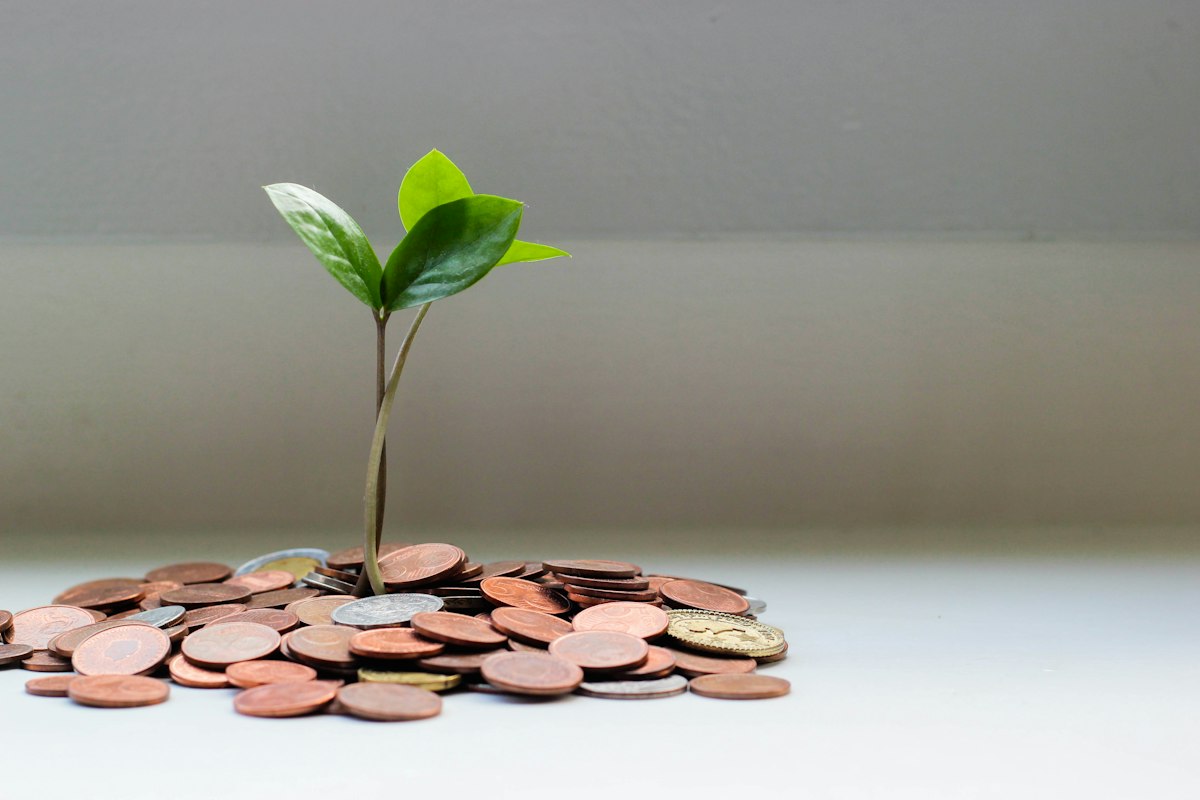
The Silent Killer: Inflation Is Eating Your Savings
This is the #1 reason keeping all your money in a bank account is a terrible long-term strategy. Inflation — the gradual rise in prices — averages about 2-3% per year in a healthy economy.
Now look at your savings account interest rate. If you’re lucky, it’s maybe 0.5-1%. Many checking accounts pay literally 0%.
Let’s do the math:
- You have $10,000 in savings earning 0.5% interest
- Inflation is running at 3%
- After one year: your account shows $10,050, but that money only buys what $9,757 could buy last year
- After 10 years: your account shows ~$10,511, but its real purchasing power is only ~$7,812
Read that again. Your $10,000 effectively becomes $7,812 in buying power over 10 years — even though the number in your account went UP. The number looks bigger, but it buys less. That’s not saving. That’s slow-motion losing.

What Bank Accounts ARE Good For
Don’t get me wrong — bank accounts aren’t useless. They’re essential for certain things:
1. Your emergency fund. This is the big one. Every financial expert agrees: keep 3-6 months of living expenses in a savings account. This money needs to be instantly accessible when your car breaks down, you lose your job, or life throws you a curveball. Accessibility matters more than returns here.
2. Short-term goals (under 1-2 years). Saving for a vacation next summer? A new laptop in 6 months? A wedding deposit due in a year? Keep that in a savings account. You can’t afford the risk of market drops for money you need soon.
3. Monthly bill money. Your rent, utilities, groceries, subscriptions — keep 1-2 months of expenses in checking for daily life. This isn’t savings; it’s operating cash.
Beyond that? Your money should be working harder. Money sitting idle in a bank account beyond your emergency fund is money losing a race against inflation.

So Where SHOULD Your Extra Money Go?
Here’s where it gets exciting. There are several places your money can grow faster than inflation — each with different levels of risk and return:
High-Yield Savings Accounts (HYSAs): The easiest first step. Online banks like Marcus, Ally, or Capital One 360 offer 4-5% APY — roughly 10x what traditional banks pay. Same FDIC insurance, same easy access. If you’re going to keep money in a savings account, at least make it a high-yield one.
Certificates of Deposit (CDs): You lock your money for a set period (3 months to 5 years) in exchange for a guaranteed higher rate. Good for money you know you won’t need for a while. The tradeoff: early withdrawal penalties.
Index Funds / ETFs: This is where the real magic happens. The S&P 500 has returned an average of about 10% per year over the last 50 years. Yes, it goes up and down in the short term, but over 10+ years, it has historically beaten every other investment. A simple S&P 500 index fund is the single most recommended investment by financial experts worldwide.
Retirement Accounts (401k, IRA): These are tax-advantaged wrappers around investments. A 401(k) with employer match is literally free money — if your employer matches 50% of contributions up to 6%, and you don’t contribute, you’re leaving thousands on the table every year.
Bonds / Treasury Securities: Lower returns than stocks but much steadier. US Treasury bonds are backed by the government and currently yield 4-5%. Series I Bonds are specifically designed to match inflation — they’re literally called “inflation-protected” securities.

The Power of Time: $10,000 Over 30 Years
Let’s compare what happens to $10,000 over 30 years in different places:
- Checking account (0% interest): Still $10,000. But with 3% inflation, it only buys what $4,120 buys today. You lost 59% of your purchasing power.
- Savings account (0.5%): Grows to $11,614. After inflation, real value: ~$4,786. Still lost over half.
- High-yield savings (4.5%): Grows to $37,453. After inflation: ~$15,440. You actually beat inflation.
- S&P 500 index fund (avg 10%): Grows to $174,494. After inflation: ~$71,925. Your money grew 7x in real terms.
The difference is staggering. Same $10,000. Same 30 years. The only difference is WHERE you put it. A checking account gives you $4,120 in real value. An index fund gives you $71,925. That’s not a small difference — it’s life-changing.

“But the Stock Market Is Scary!”
Fair concern. Let’s address the elephant in the room.
Yes, the stock market crashes sometimes. It dropped 34% in March 2020. It fell 57% during 2008-2009. Those are terrifying numbers.
But here’s what the fear-based headlines don’t tell you: the stock market has recovered from every single crash in history. The 2020 crash? Recovered in 5 months. The 2008 crash? Recovered by 2013 and then tripled by 2024.
The key is TIME. If you need the money in 6 months, don’t invest it. If you don’t need it for 10+ years, history overwhelmingly shows that investing beats saving — by a massive margin.
The real risk isn’t investing. The real risk is NOT investing and watching inflation eat your savings for decades.

A Simple Framework: The Money Bucket System
Not sure how to split your money? Here’s a dead-simple framework:
Bucket 1 — Checking Account (1-2 months expenses): Daily spending money. Rent, groceries, bills. Keep it accessible.
Bucket 2 — Emergency Fund (3-6 months expenses): High-yield savings account. Don’t touch it unless it’s a real emergency. Not a sale at Target. A REAL emergency.
Bucket 3 — Short-term goals (1-3 years): High-yield savings or CDs. Vacation fund, car down payment, wedding savings.
Bucket 4 — Long-term growth (5+ years): Index funds, retirement accounts (401k/IRA). This is where the magic of compounding happens. Leave it alone and let time do the heavy lifting.
The key: match the time horizon to the risk level. Money you need soon = safe and accessible. Money you won’t touch for years = invested and growing.
Bonus Fact
If you had invested just $100 per month in the S&P 500 starting in 1994, by 2024 you would have invested a total of $36,000 out of pocket. But your account would be worth approximately $230,000+ thanks to compound growth. That same $36,000 in a regular savings account at 0.5%? About $38,700. The difference between investing and “just saving” is nearly $200,000 over 30 years — from just $100 a month.

Wrapping It Up
A bank account is a tool — a great one for short-term needs and emergencies. But it’s a terrible place to park your life savings. Inflation is a silent thief, and a 0.5% savings account is handing it the keys.
The smartest move isn’t to choose between saving and investing. It’s to do both — save for safety, invest for growth. Keep your emergency fund safe and accessible, then put the rest to work in investments that actually beat inflation.
Your future self will thank you. Because the best time to start investing was 10 years ago. The second best time? Today.
Disclaimer: This article is for educational purposes only and does not constitute financial advice. Past performance does not guarantee future results. Please consult a qualified financial advisor before making any investment decisions.
Sources
- Federal Reserve — Interest Rates and Savings Account Yields
- S&P Dow Jones Indices — S&P 500 Historical Returns
- U.S. Bureau of Labor Statistics — Consumer Price Index Data
- Investopedia — Savings Account vs. Investing: What’s the Difference?