You can’t hold it. You can’t smell it. You can’t put it in your pocket or hang it on your wall. Yet somehow, a single share of stock can be worth hundreds — even thousands — of dollars.
If you’ve ever wondered “what exactly AM I buying when I buy a stock?”, you’re not alone. Let’s break it down in the simplest way possible.
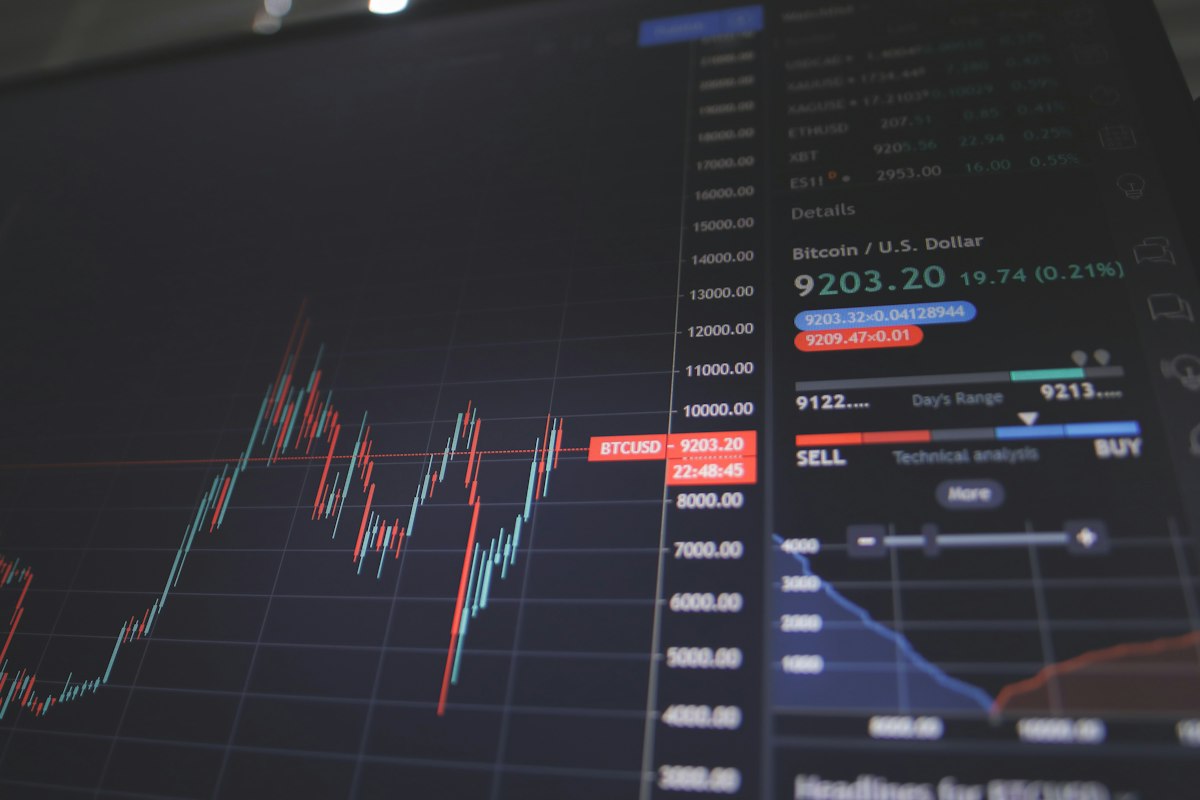
A Stock Is Just a Tiny Slice of a Real Business
Imagine your friend opens an amazing pizza shop. It’s doing great, but they need $100,000 to open a second location. They can’t get a bank loan, so they come to you and say:
“Give me $10,000 and I’ll give you 10% of my entire pizza business.”
Congratulations — you just “bought stock” in a pizza shop! That 10% is your share. If the business makes money, you get 10% of the profits. If someone offers to buy the whole business for $200,000, your 10% is now worth $20,000. Your money doubled without you making a single pizza.
That’s literally what stocks are. When you buy a share of Apple, you own a teensy-tiny piece of the actual company — the iPhones, the stores, the cash in their bank accounts, all of it. You’re a part-owner. A very, very small part-owner… but still an owner.

Why Would a Company Sell Pieces of Itself?
“If the business is so great, why would they share it?” Great question. The answer is simple: they need money to grow.
When a company “goes public” through an IPO (Initial Public Offering), they’re basically saying: “We have a great business, but we need billions of dollars to expand. Instead of borrowing from a bank, we’ll sell small pieces to millions of people.”
Apple’s first IPO in 1980 was priced at $22 per share. They raised $100 million that day. The company used that money to build more products, hire more people, and become the trillion-dollar giant we know today. And those early investors? They’ve made roughly a 150,000% return on their investment. Not a bad deal for either side.

How Does a Stock Get Its Price?
Here’s where it gets interesting. A stock’s price isn’t set by the company — it’s set by millions of people buying and selling, every single second.
Think of it like limited-edition sneakers. Nike might price them at $200, but if everyone wants them, people will pay $500 on the resale market. If nobody wants them? You might get them for $100.
Stocks work the same way. The price goes up when more people want to buy (demand > supply), and goes down when more people want to sell (supply > demand). But what makes people want to buy or sell?
- Company earnings — Is the company actually making money?
- Future potential — Will they make MORE money tomorrow?
- News and events — New product launch? CEO scandal? Government regulation?
- Overall economy — Recession coming? Or is everything booming?
- Pure human emotion — Fear, greed, hype, and FOMO are real market forces
Yes, that last one is very real. Sometimes stocks go up or down for absolutely no logical reason. Welcome to the market.

The Two Ways Stocks Make You Money
There are exactly two ways to profit from owning stocks:
1. Capital Gains (Buy Low, Sell High): You buy a share at $50, wait for it to grow, sell it at $100, and pocket the $50 difference. This is what most people picture when they think “stock market.” It’s the thrill of the game — but it requires patience.
2. Dividends (Get Paid for Holding): Some companies share their profits with stockholders every quarter. If you own 100 shares of a company that pays $2 per share per year, you get $200 just for holding the stock. It’s like getting a “thank you” check in the mail — over and over again.
Some investors chase growth stocks (companies that reinvest all profits to grow faster — think Tesla, Amazon). Others prefer dividend stocks (companies that pay steady income — think Coca-Cola, Johnson & Johnson). The best strategy depends entirely on your goals and timeline.

But Wait — Stocks Can Lose Value Too
Here’s the part nobody likes to talk about at parties. Stocks can go down. Sometimes way down.
When you buy a stock, you’re betting that the company will do well in the future. But companies can fail, industries can be disrupted, and economies can crash. If a company goes bankrupt, your stock could literally become worth $0.
The S&P 500 has crashed multiple times — the dot-com bubble in 2000, the financial crisis in 2008, and the COVID crash in 2020. But here’s the silver lining: historically, the market has ALWAYS recovered and climbed higher. The S&P 500’s average annual return over the last 50+ years? About 10%.
The key takeaway: stocks are not a get-rich-quick scheme. They’re a get-rich-slowly tool — if you’re patient and diversified.
Bonus Fact
The world’s first stock exchange was established in Amsterdam in 1602 by the Dutch East India Company. They sold shares to fund their spice trade voyages to Asia. So essentially, the entire stock market exists because people really, really wanted pepper and cinnamon 400 years ago. Spicy origins, indeed.

Wrapping It Up
So, what are stocks? They’re tiny pieces of real businesses that you can buy and sell. They’re invisible, sure — but they represent something very real: ownership in companies that make products, employ people, and generate profits.
The next time someone asks “how can something you can’t see be worth money?”, just ask them: “Can you see Wi-Fi? Can you hold a Bitcoin? Can you touch your bank account balance?” Value doesn’t have to be visible to be real. And that’s the magic of the modern economy.
Start small, stay curious, and remember — every billionaire investor started by buying their very first share.
Disclaimer: This article is for educational purposes only and does not constitute financial advice. Please consult a qualified financial advisor before making any investment decisions.
Sources
- Investopedia — Stocks: What They Are, Types, and How They Differ From Bonds
- U.S. Securities and Exchange Commission — Introduction to Investing
- NYSE — History of the New York Stock Exchange
- S&P Dow Jones Indices — S&P 500 Historical Returns Data